SLP graduate workshop
Beyond the Device
Communication with joy, purpose, and access
You've explored the devices. Today is about what makes them work: purposeful communication, real access, evidence you can trust, and implementation that lasts. Keep this page open on your phone. You'll use it at every center.
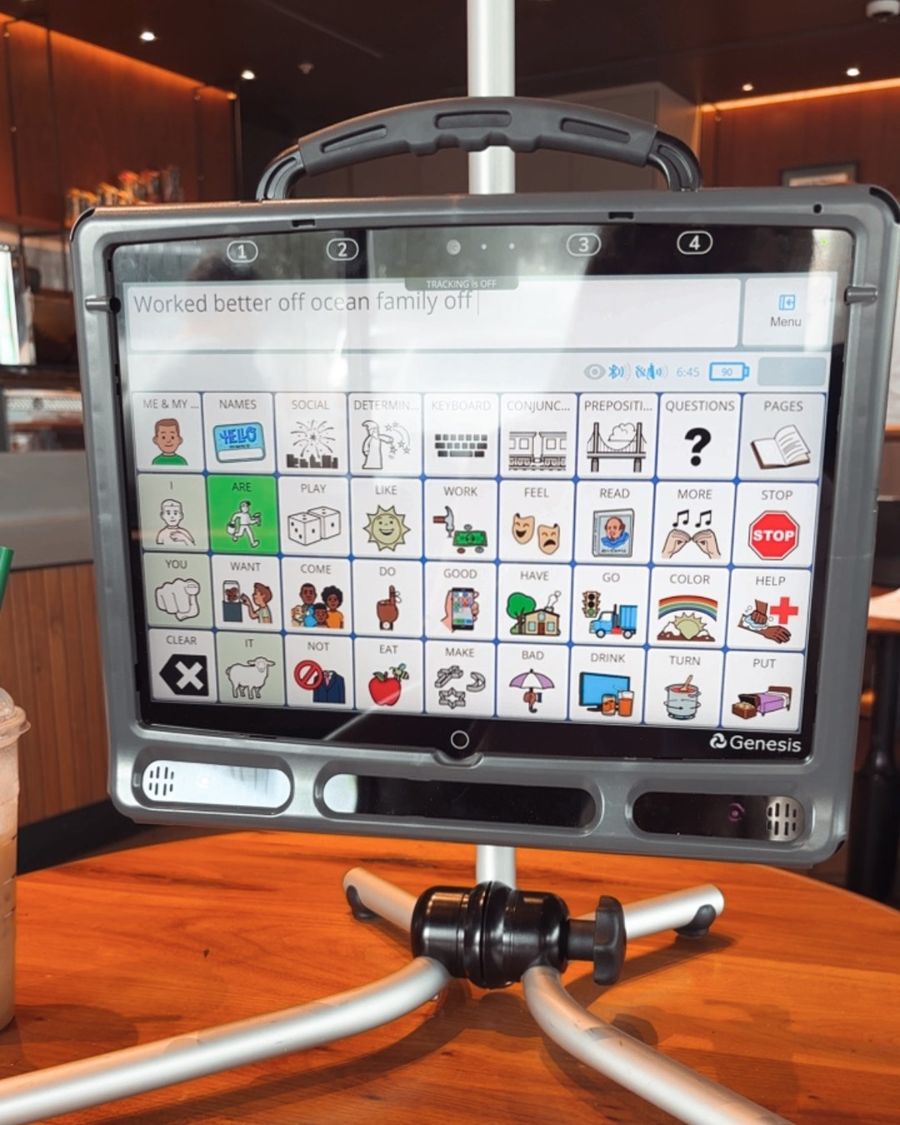
workshop.speakingaac.com
How today works · 60 minutes
Four centers
Each center has a short activity, a clinical tip and references you can use in placement and coursework.
The joy and purpose of communication
Why we communicate, joy-centered AAC and a working access framework.
12 min Center 2Access through play and switches
Access methods and hands-on switch-adapted toy stations.
18 min Center 3Demystifying myths and pseudoscience
Evidence or hype? Learn to vet what you see online.
10 min Center 4Successful AAC implementation
The prompt hierarchy, real scenarios, goals and implementation plans.
12 min CloseExit ticket
One thing you'll try, one purpose you'll build, one question.
5 minYour research passport
0 of 8 studies explored
Finish a study's quick check at any center to collect its stamp. Your stamps are saved on this device.

Meet your presenter
Malka Arnstein, M.S., CCC-SLP, CAS
Founder of SpeakingAAC LLC. I've been an SLP and AAC specialist since 2010, working in schools and clinics across New York, Connecticut and Florida. That includes 12.5 years as a school-based SLP and 2 years as a district Assistive Technology Specialist.
I founded SpeakingAAC in 2024 to give families and professionals a high level of AAC expertise, with care that is supportive, family-centered and full of possibility. I serve children, teens and adults.
What I do
- AAC evaluations and therapy in Boca Raton and South Florida
- Parent and caregiver coaching
- Trainings for districts and teams
- Courses for SLPs, including Goals to Action
- Mentorship for SLPs building AAC practices
Center 1 · 12 minutes
The joy and purpose of communication
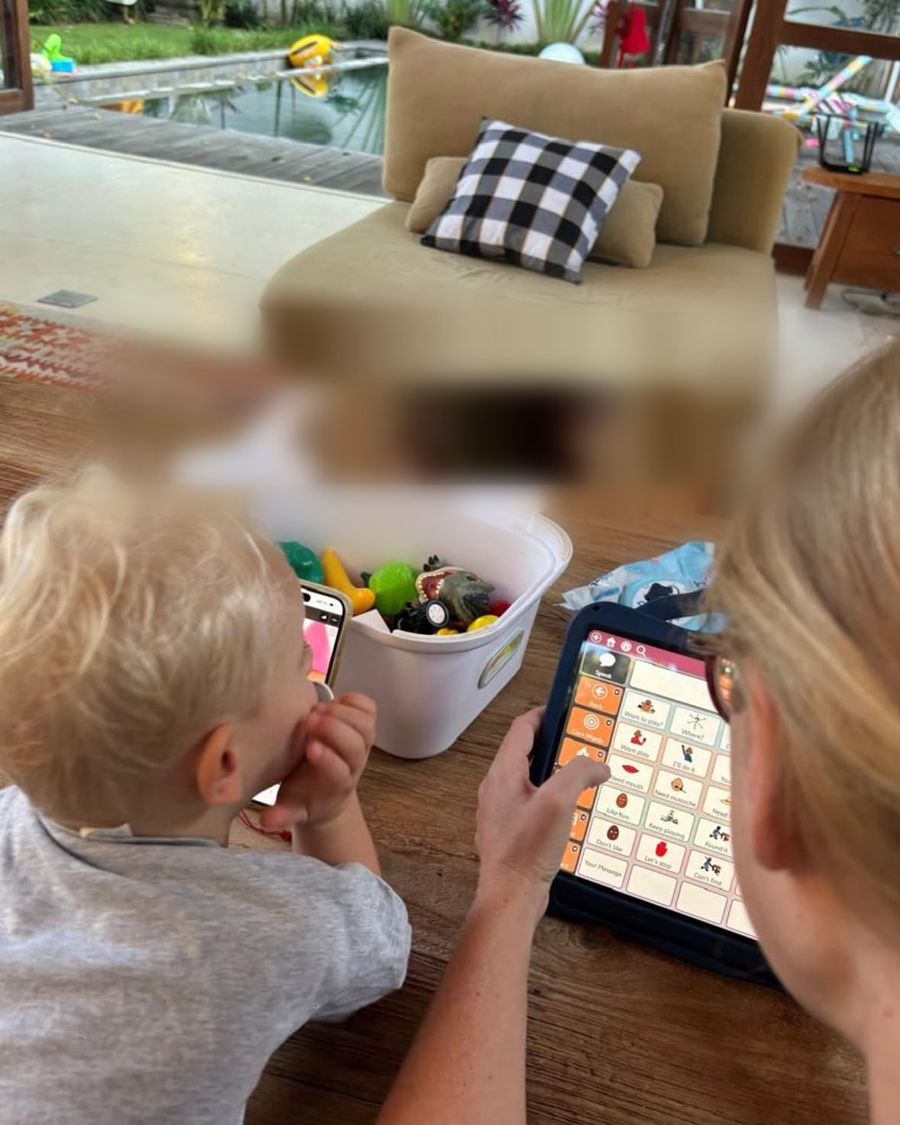
Communication is how we connect, share who we are and enjoy each other. Requesting is only one small part of it.
By the end of this center you can
- Name the four purposes of communication (Light, 1988)
- Explain why joy and motivation drive communication
- Use a simple framework to look at AAC beyond the device
Activity A · 4 min · on your own
Why do we talk?
Sort each message into one of Light's four purposes. Some could fit more than one. Pick the best fit, then see how much of real communication is requesting.
What joy-centered AAC looks like
Communication happens in the presence of joy and wanting something. Motivation is the key.
Start with what they love
Interests shape vocabulary, activities and the hooks you build in.
Play is the context
Real, fun activities create real reasons to communicate.
Model without pressure
We show the words. We never demand them.
Never withhold
We don't hold back items to make someone use the device. Use motivation and hooks instead.
All communication counts
Speech, gestures, signs, vocalizations and AAC are all valid. AAC is not a "better" form.
Give words for fun
Silly, uh-oh, whoa, again, yuck, my turn, so funny.
Activity B · 6 min · with your pod
A working framework: beyond the device
First, tap through the five parts of the framework. Then, with your pod, pick one case below and talk it through.
Pick your case
Research lab · explore on your own
The research behind it
Tap through each study: the question, who was studied, what they found and how to use it. Then try the quick check to earn a stamp in your research passport.
Clinical tip
Look at the person's vocabulary set. If most of the words are nouns for requesting, add words for social closeness and commenting first. That's often where the joy is.
For your placement
- Plan activities around the person's interests and build in hooks.
- Model words for all four purposes, especially social closeness.
- Honor every form of communication, and never withhold to get a response.
References
Light, J. (1988). Interaction involving individuals using augmentative and alternative communication systems: State of the art and future directions. Augmentative and Alternative Communication, 4(2), 66–82.
Brady, N. C., Bruce, S., Goldman, A., Erickson, K., Mineo, B., Ogletree, B. T., Paul, D., Romski, M. A., Sevcik, R., Siegel, E., Schoonover, J., Snell, M., Sylvester, L., & Wilkinson, K. (2016). Communication services and supports for individuals with severe disabilities: Guidance for assessment and intervention. American Journal on Intellectual and Developmental Disabilities, 121(2), 121–138.
Center 2 · 18 minutes
Access through play and switches
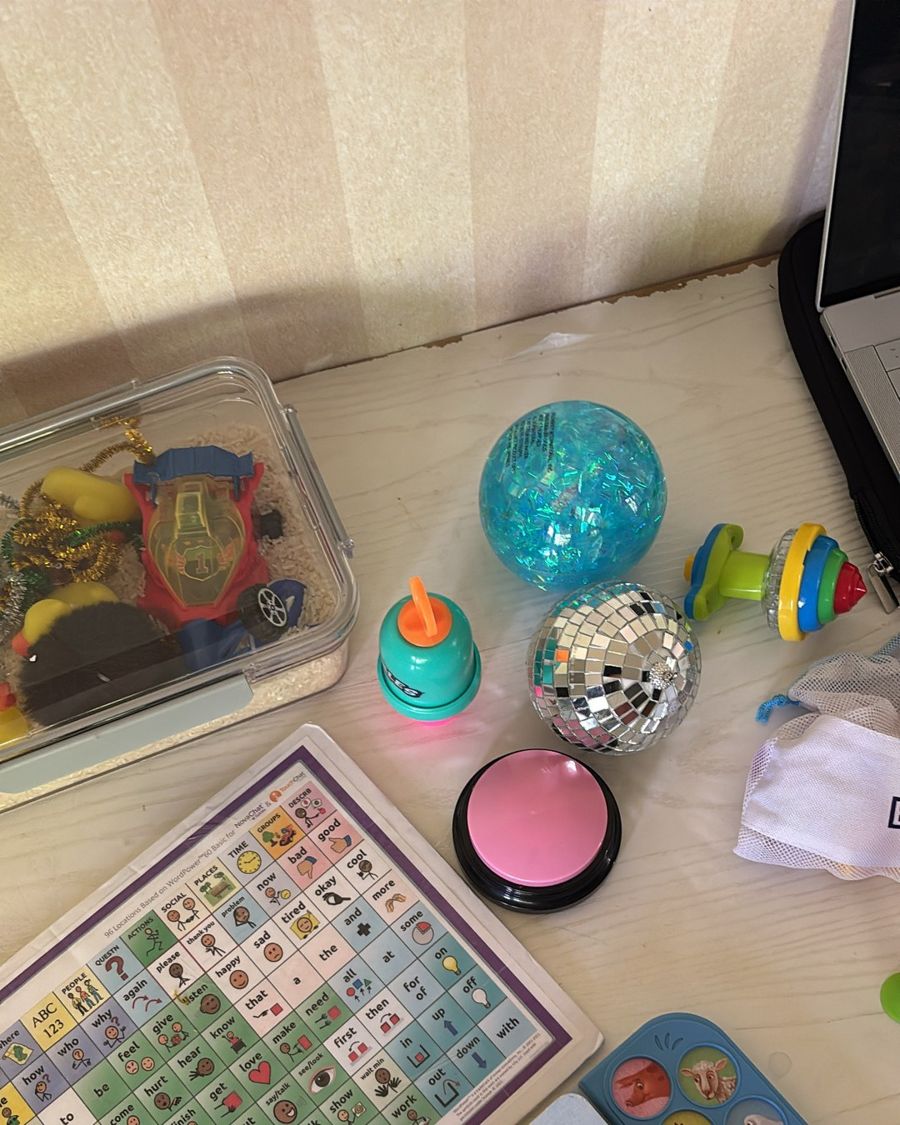
Access is how a person reaches their words. It's more than motor skills: vision, hearing, positioning, fatigue and the environment all play a part.
By the end of this center you can
- Compare four ways people access AAC
- Explain what switch-adapted toys teach
- Try switch placement and partner-assisted scanning hands-on
Four ways to reach your words
Direct selection
Touch, keyguards, head or light pointers, adapted styluses.
Eye gaze
Selecting with the eyes, on a camera-based device or an e-tran board.
Switch scanning
Options are highlighted in turn, and one or two switches select them.
Partner-assisted scanning
A partner offers choices aloud or visually, and the person signals yes.
What switch-adapted toys teach
Cause & effect
"I did that!" is a first step toward intentional communication.
Motor practice
Finding a reliable body site and movement.
A base for scanning
Timing, waiting and activating on purpose.
Built-in language
Go, stop, more, again, fast, my turn, uh-oh.
Shared play
Turn-taking with siblings, peers and partners.
Joy
Laughter is a reason to communicate.
Across the lifespan
Switches aren't only for young children. Teens and adults use the same principles with adapted music players, fans, blenders and other everyday devices.
Research lab · explore on your own
What makes a competent communicator?
Access is one piece of a bigger picture. This paper explains how the pieces fit together.
Hands-on · 16 min · rotate every 4 minutes
Access stations
Station 1
Cause & effect
Activate each toy with the switch.
Ask yourselves: How would you know a person has made the connection between the switch and the toy?
Station 2
Switch + language
Pair every activation with modeled words on the core board.
Try: model one word beyond what you say. Comment more than you question.
Station 3
Positioning & placement
Try the switch at your hand, elbow, head and foot.
Notice: what changes in speed, accuracy and effort? Log it below.
Station 4
Partner-assisted scanning
Offer choices one at a time from a choice board.
Practice: a clear, steady pace and an agreed yes signal.
Words to model while you play
Keep this strip open at Stations 1 and 2.
Station 3 log · for your own notes
Body-site check
Debrief · 2 min
What did you notice?
What surprised you?
About the toys, the switches or yourself as a partner.
What changed with positioning?
Speed, accuracy, effort, fatigue.
Where did joy show up?
What made you laugh, try again or want another turn?
Who decides access?
The person, family, OT, PT, vision specialists and you, together.
For your placement
- Access is trial and error. Expect to adjust.
- Position first, then pick a switch site. Fatigue matters across the day.
- Pair every activation with language and fun.
References
Light, J., & McNaughton, D. (2014). Communicative competence for individuals who require augmentative and alternative communication: A new definition for a new era of communication? Augmentative and Alternative Communication, 30(1), 1–18.
Beukelman, D. R., & Light, J. C. (2020). Augmentative and alternative communication: Supporting children and adults with complex communication needs (5th ed.). Paul H. Brookes.
Center 3 · 10 minutes
Demystifying myths and pseudoscience
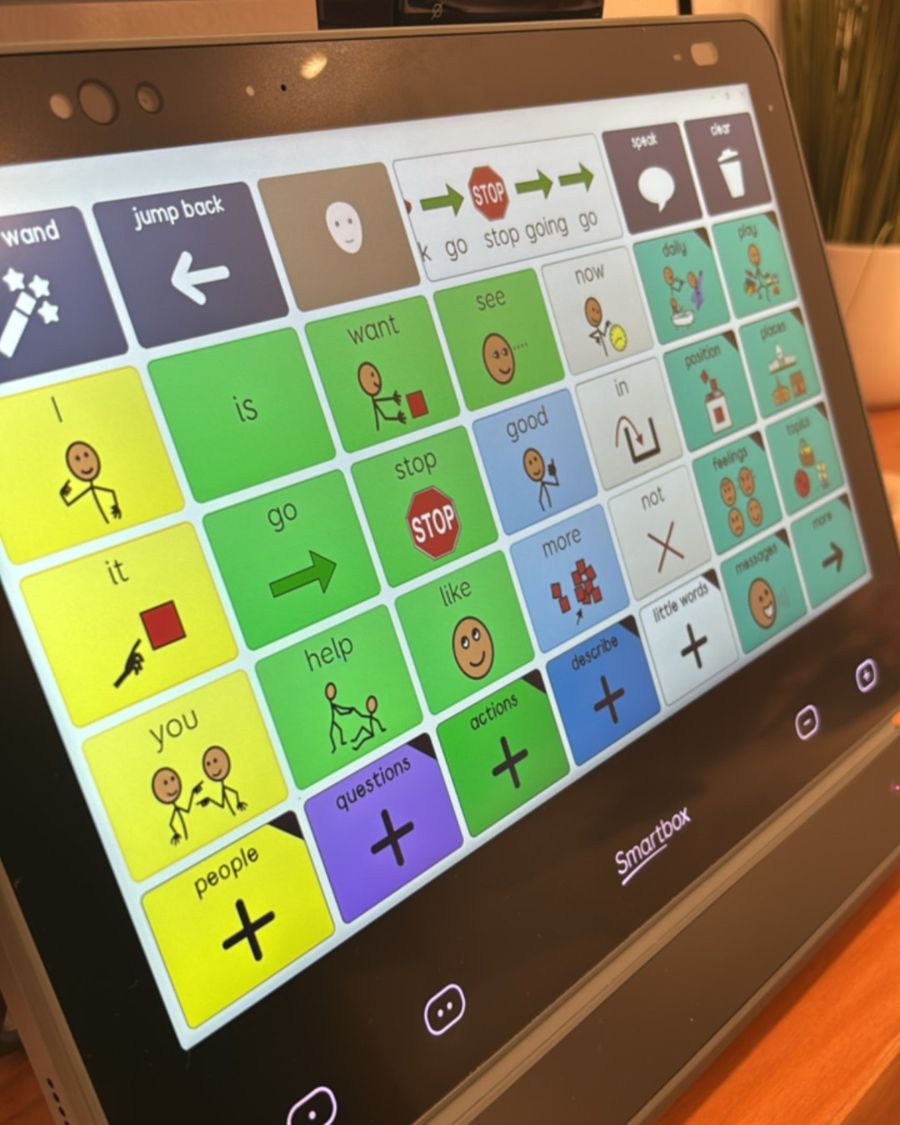
Families find AAC claims on social media every day. As clinicians, we need to know what the evidence says and how to explain it kindly and clearly.
By the end of this center you can
- Separate common AAC myths from evidence
- Explain professional positions on facilitator-dependent methods
- Use a red-flag checklist to vet new approaches
Activity · 6 min · in small groups
Evidence or hype?
Decide as a group before you tap. Then talk about how you'd explain the answer to a parent.
Research lab · explore on your own
Go to the source
These are the studies and statements behind the answers in Evidence or Hype. Dig in and pull out what you'd share with a family.
Red-flag checklist
Think of an approach you've seen online. Check every statement that applies.
Clinical tip
Lead with empathy. Families who try these methods want the same thing we do: to hear their loved one's voice. Acknowledge that, share the evidence, and offer a path to independent communication.
For your placement
- AAC supports speech. It does not replace or prevent it.
- There are no prerequisites for AAC.
- Communication must belong to the person. Authorship matters.
References
American Speech-Language-Hearing Association. (2018). Facilitated communication [Position statement]. asha.org/policy/ps2018-00352
American Speech-Language-Hearing Association. (2018). Rapid prompting method [Position statement]. asha.org/policy/ps2018-00351
American Speech-Language-Hearing Association. (n.d.). FC and RPM: Frequently asked questions. asha.org/slp/fc-and-rpm-faqs
Millar, D. C., Light, J. C., & Schlosser, R. W. (2006). The impact of augmentative and alternative communication intervention on the speech production of individuals with developmental disabilities: A research review. Journal of Speech, Language, and Hearing Research, 49(2), 248–264.
Romski, M., & Sevcik, R. A. (2005). Augmentative communication and early intervention: Myths and realities. Infants & Young Children, 18(3), 174–185.
Center 4 · 12 minutes
Successful AAC implementation
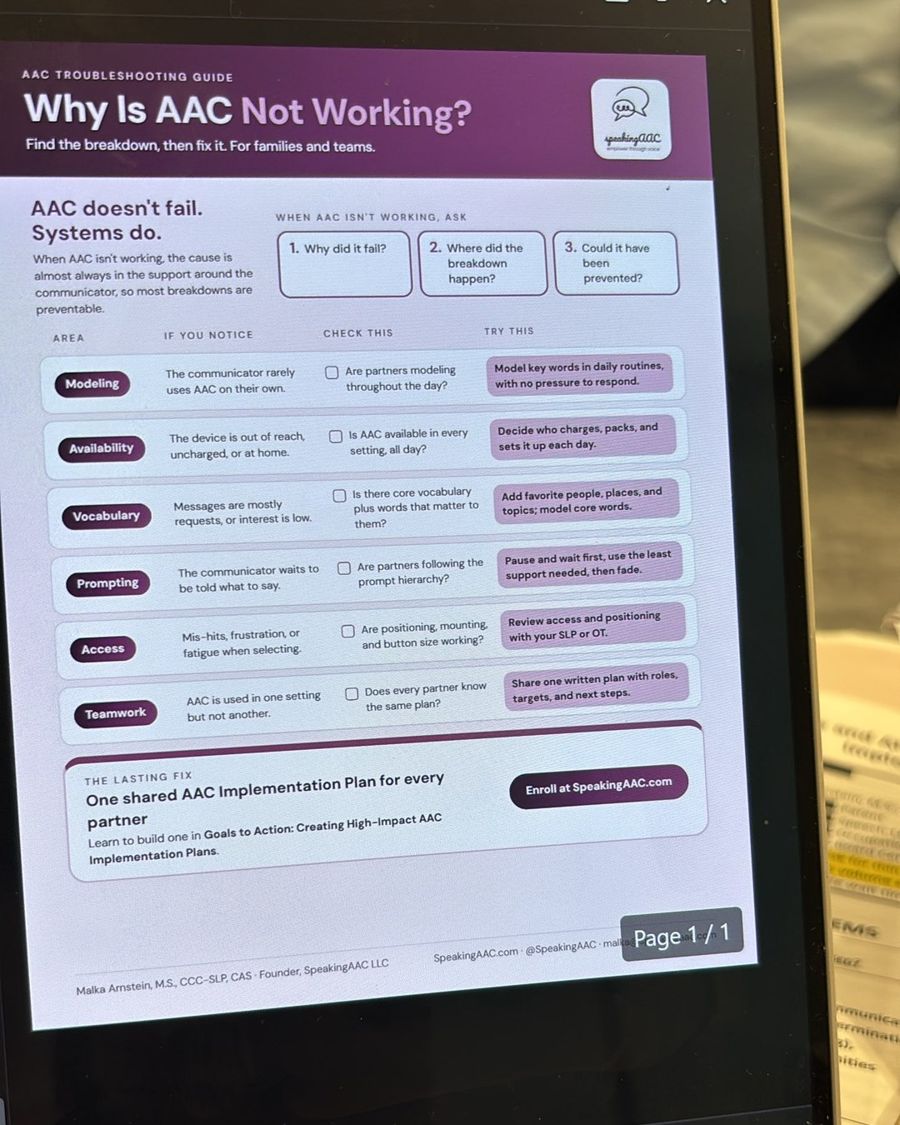
Getting the device is day one. Implementation is what turns it into a voice: modeling, thoughtful prompting, coached partners, meaningful goals and a plan the whole team follows.
By the end of this center you can
- Order the AAC prompt hierarchy from least to most support
- Choose a next step in real scenarios
- Rewrite a goal so it's purposeful and meaningful
Activity A · 4 min · with a partner
Build the prompt hierarchy
Use the arrows to put these 9 levels in order, from least support (top) to most support (bottom). Then check your answer.
Remember
Start with the least support and fade back down as quickly as you can. Physical support is always last, and always ask first. The goal is self-initiated communication, not a correct answer.
Activity B · 4 min · in small groups
What would you do next?
Activity C · 3 min · on your own
Rewrite the goal
Aim for a purpose beyond requesting, such as commenting, sharing information or social closeness.
Sample
During shared book reading with a caregiver, the client will use AAC to comment (e.g., FUNNY, UH-OH, I LIKE) on at least 3 pages per session, with support no greater than a visual cue to the device.
From goals to an implementation plan
A goal only works if the whole team knows what to do every day. This is the structure of the SpeakingAAC AAC Implementation Plan.
- Communication systems & accessEvery system the person uses and how they access each one.
- Daily opportunitiesWhen and where communication happens across the schedule.
- StrategiesModeling, hooks and prompting, written so any partner can follow them.
- Who does whatA team responsibility matrix: family, teachers, aides, therapists.
- GoalsPurposeful, measurable goals tied back to the plan.
Go deeper
My course Goals to Action: Creating High-Impact AAC Implementation Plans walks through building a plan your whole team can follow. learn.speakingaac.com
Research lab · explore on your own
Why modeling and partners matter
Two meta-analyses that every AAC clinician should know.
Research recap · 3 min · with a partner
Match the finding to the study
Pick the study each finding comes from, then check your answers.
For your placement
- Model on the device all day, in motivating activities.
- Use the least support needed, and fade quickly.
- Coach every partner. The plan matters as much as the device.
References
Kent-Walsh, J., Murza, K. A., Malani, M. D., & Binger, C. (2015). Effects of communication partner instruction on the communication of individuals using AAC: A meta-analysis. Augmentative and Alternative Communication, 31(4), 271–284.
O'Neill, T., Light, J., & Pope, L. (2018). Effects of interventions that include aided augmentative and alternative communication input on the communication of individuals with complex communication needs: A meta-analysis. Journal of Speech, Language, and Hearing Research, 61(7), 1743–1765.
Before you go · 5 minutes
Exit ticket
Your answers go straight to me, and I'll use your questions to follow up with your class.

Thank you
Let's stay connected
Free resource
Try the AAC Feature Matching Tool under Resources at SpeakingAAC.com. It suggests apps and devices to trial, with side-by-side comparisons and printable results.